Wednesday, April 5, 2017

7 Tips for Sharing the Road with Pedestrians

With Spring weather inching closer and closer more people are getting out and enjoying the sun. This includes pedestrians walking around neighborhoods and towns and bicyclists trading in their keys for a helmet.

According to the Centers for Disease Control and Prevention, the 3 pedestrian groups most at-risk for accidents are seniors 65 and older, kids ages 5–9, and people under the influence of alcohol.
The National Highway Traffic Safety Administration reports that there were roughly 65,000 pedestrian injuries due to car accidents in 2014.

With these sobering facts in mind, here are some tips to pedestrians and drivers safe.

Know where the kids are

Children between the ages of 5 and 9 are at the greatest risk of being hit by a vehicle. Children are smaller and less visible and they can be unpredictable. The law imposes a higher duty of care on drivers when it comes to children. The presence of children is a warning of danger to the driver to exercise greater care. Thus, a driver must exercise a greater degree of care when they know or should know that small children are at play in the area; for example, while driving by schools, parks, and residential areas.

Also remember to never pass a stopped school bus, as kids could be crossing the street from a number of hard-to-see angles.

Slow down for crosswalks

Crosswalks, particularly in big metro areas, don't always command respect from drivers. But the truth is crosswalks aren't just for those who are walking, jogging, or rollerblading. They're also for you, the driver. Crosswalks protect you by designating a safe area for pedestrians to cross — which cuts down on jaywalking and unexpected pedestrian crossing.

When you approach a crosswalk, always give the right-of-way to the pedestrian. If you're making a turn, scan the road closely before turning.

Practice driveway safety

Backing out of your driveway is one of those simple things you do a million times until you can do it with your eyes closed — which is exactly what makes it dangerous.

Take your time when backing out of your driveway. You should check the mirrors first but not rely solely on them. Actually turn and look behind your car. It can also help to roll down your windows so you can hear approaching footsteps or smaller kids and give your horn a light honk so pedestrians know you're there even if they can't see you.

Beware the parking lot

An alarming 52%of all back-over injuries happen in parking lots, according to data cited by the Insurance Institute for Highway Safety. When a car backs into a pedestrian, it's considered a back-over accident.

Parking lots are breeding grounds for accidents because they're full of both cars and pedestrians and they're often unclear on who should go where. Drivers and pedestrians should keep their guard up when navigating parking lots.

Consider driving conditions

Weather and road conditions add to your stopping distance, which means if you're driving a tad fast during not-so-nice weather and a pedestrian runs into the street, you're going to have a harder time stopping. Pedestrians don't always have reflective material like cars and cyclists, so always adjust your speed according to the weather. This is especially true at night.

Leave your smartphone alone

It's well-known that distracted driving puts pedestrians at greater risk. A lesser-known problem is distracted walking. Avoid the temptation to multitask behind the wheel and while crossing the street.

Stay alert for pedestrians with special needs

As a driver, keep an eye out for pedestrians who are at greater risk in crosswalk scenarios, including those who use a wheelchair, a cane, or any other type of assistive device. Also be aware of blind pedestrians.

If you have suffered injuries as a pedestrian, contact our pedestrian accident attorneys today for your free consultation by calling 1-800-444-5309.

Monday, April 3, 2017

Hoverboard Injuries Continue Despite Recent Recall

While hoverboards have been growing in popularity in recent years, the electronic scooters have caused concerns due to the explosive risks. The Consumer Product Safety Commission last year recalled more than 500,000 of the devices from 11 different companies. Many airlines have banned them on flights, and several local colleges do not allow hoverboards in university buildings.

The latest incident occurred March 11, 2017 in Harrisburg, Pa., when a recharging hoverboard set a row house ablaze, killing a 2-year old and a 10-year old while leaving a 3-year old and 4 year-old with injuries.

Fire officials say the family heard a “sizzling or crackling in the hoverboard” and suspect it caused the fatal blaze.

In the wake of the tragedy, the federal government is once again warning consumers about the dangers of hoverboards and associated safety hazards.

In some cases, the lithium-ion batteries were found to overheat, reportedly starting dozens of fires in homes across America. Homes have been destroyed as a result of hoverboard fires in Washington, D.C., Nashville and elsewhere.

If you or a loved one suffered serious injuries or burns as a result of a malfunctioning hoverboard, you should contact one of Pisanchyn Law Firm’s experienced hoverboard lawyers now for a free consultation by calling 1-800-444-5309.

Tuesday, March 21, 2017

Welcome Workers' Compensation Attorney Michael Brady

The Pisanchyn Law Firm is proud to announce that we have hired Attorney Michael Brady. Attorney Brady brings a wealth of experience with him, especially in the area of workers' compensation. He has over 30 years experience and has primarily focused his practice in getting injured workers the compensation that they deserve.

Attorney Michael Pisanchyn commented, "I am very excited to bring Attorney Brady's talent and tenacity to the firm. Both have dove tailed perfectly with the other aggressive, skilled and excellent attorneys already at the Pisanchyn Law Firm."

Visit our website, www.pisanchynlawfirm.com, to read more about Attorney Brady's qualifications as well as all of the other attorneys at the Pisanchyn Law Firm.

If you or a loved one is or has been injured, please do not hesitate to contact us as we never charge a fee until we win your case.

Saturday, March 18, 2017

What Happens after Hiring a Personal Injury Lawyer?

You've suffered a serious injury. You've found an injury attorney – what happens next?

Every case will not be the same. What happens immediately after hiring an attorney largely depends on the type of case, when you hire an attorney, and how severe your injuries from the accident are.
Generally speaking, the first thing an attorney usually does is send out representation letters to everyone involved to let them know you have legal counsel. This is very important, especially if the other driver’s insurance company has already contacted you. If the other insurer hasn't yet, we can prevent them from doing so with this type of letter.

Once an insurance company receives a representation letter, they can no longer contact you. An attorney will provide the insurance company with basic information about you and about the case. (Watch this video regarding providing recorded statements to insurers.)

If you are contacted by an insurance adjuster, investigator or anyone after hiring an attorney, you need to get the person’s name, and immediately inform your attorney. You should never give the person any information, other than your attorney’s name and phone number.

Representation letters will also be sent to any medical providers involved, letting them know that they will need to send your attorney a full set of medical records and bills once treatment is finished.

Accident Investigation & Property Damage

Next, an attorney will investigate the accident, if necessary. This includes contacting witnesses to obtain statements and taking photographs of the scene of the accident. This sometimes includes utilizing an investigator and other experts.

If the property damage to your vehicle has not been finalized by this time, your attorney will also assist in this area if need be. Usually, property damage is resolved fairly easily if there is enough insurance. If you pursue a diminished value claim, this will take longer and will be much more involved.

What You Should Do

While your attorney is doing all of the above and more you have one job: Get the appropriate medical care and get better. Follow your doctor’s advice and keep your appointments.

Remember, each case is different and what's described here is general information. To get all of your questions answers you can call our personal injury attorneys at 1-800-444-5309 any time for a free consultation.

Tuesday, March 14, 2017

Defective Baby/Children’s Product Attorneys

Baby injuries associated with nursery products like carriers, strollers and cribs are on the rise, a study shows.

The study found a 23.7 percent increase in injuries to young children related to nursery products between 2003 and 2011.

Overall, the injuries in the study weren't associated with one particular product:
  • 19.5% were associated with baby carriers, with seat-type carriers most likely to be implicated in injuries.
  • 18.6% were associated with cribs or mattresses
  • 16.5% were associated with strollers
  • 16.2% were associated with walkers, jumpers or exercisers
The numbers came from a public database of emergency department records across the United States. Researchers ultimately looked at 48,653 cases of patients younger than three years between 1991 to 2011.

Based on these cases, researchers estimate that a child 3 years old or younger is treated in a United States emergency department for a nursery-product-related injury every eight minutes.

The increase in injuries calls for changes in both how caregivers are using baby products and in the design of the products. For parents and caregivers, the authors suggest following the "four Rs" to keep their kids safe:
Typically, a product recall will be put into place by the government or by the manufacturer if it becomes aware of a safety issue — like these recent nursery product recalls:
  • Summer Infant bathtub because it has a drowning risk
  • Chimparoo Baby Carrier which puts children at risk of falling
While recalls and studies like this do help protect children they are sadly sometimes too late. If your child has been injured as a result of a recalled or dangerous product call our experienced baby product liability attorneys at The Pisanchyn Law Firm for your free consultation at 1-800-44-5309. You could be entitled to compensation from the manufacturer, the retailer, or even the wholesaler.

Sunday, March 12, 2017

Distracted Driving - Eating while Driving

70% of drivers eat and drink while operating a vehicle and 83% of the drivers usually drink a beverage behind the wheel. Taking our meals on our travels is so common that we may not even realize how it impacts our driving ability.
The National Highway Traffic Safety Administration's (NHTSA) study, The Impact of Driver Inattention on Near-Crash/Crash Risk, explores how tasks that may seem insignificant to motorists (e.g. eating and drinking) could divert drivers' attention and potentially cause car accidents.

According to the study, inattentive driving contributes to over 45% of all motor vehicle accidents. The study found participants to be inattentive when they attempted to engage in "secondary tasks" while driving.

Many of us are familiar with the substantial effect that the secondary task of operating a cell phone has on our driving ability. But the study identified another secondary task, that hasn't received as much media attention, as a potential risk-factor to drivers: eating and drinking while driving.

Eating and drinking while driving causes a similar strain on a driver's attention as does using a cell phone because both activities cause cognitive, manual and visual distractions. Eating in our cars doesn't just involve putting food in our mouths—it involves manipulating packaging, inserting straws, and avoiding spills.

These actions aren't inherently dangerous by themselves, but a driver's ability to process new information becomes much less efficient when additional demands require their attention. Someone who has just spilled a hot beverage on themselves may not be able to react as quickly to an unexpected hazard in the road.

The study went on further to identify the types of car snacks that require the most attention.

The most risky foods to eat behind the wheel:
  1. Hot beverages and liquids
  2. Messy foods
  3. Drinks without lids
  4. Greasy and salty foods
Cruising through the drive-thru when you're swamped for time is convenient, but try to wait until you've reached your destination to enjoy your meal. If you must eat behind the wheel choose a less complicated car snack than what's listed above.

If a distracted driver ever injures you, contact the Pisanchyn Law Firm's accident attorneys for a free consultation at 1-800-444-5309.

Who is Responsible for Paying Medical Bills After an Injury?

Serious injuries require costly and sometimes even life-long medical treatment, and unfortunately, when those bills pile up, recovery is often an afterthought.

No matter the type of accident that caused your injury, if you have concerns paying your medical bills, and aren't sure who should be paying these bills, we can help you.

Remember, all cases are different and this is just general information. What is covered here is not legal advice and it is always best to contact our attorneys for a free consultation to have your specific questions about your specific case answered. 

Car Accidents

If you or someone you care about were injured in a car accident, the details related to the crash will largely determine not only if you have a case, but who is liable for paying associated medical bills.

Typically, after an accident your auto insurance coverage is always your first line of payment, regardless of whether you are the victim or the driver at fault. Your own auto insurance covers you, whether you were injured in your own car, in a friend's vehicle, or as a pedestrian. When those benefits max out, your health insurance benefits kick in. Don't have insurance? You could be eligible for Medicaid and/or Medicare.
Things get more complicated if you don't own a car and nobody living in your home has car insurance coverage. In these cases, the auto insurance company insuring the vehicle in which you were a passenger may apply.

Pennsylvania insurance rules are confusing and complex, which is why we recommend car accident victims never try to settle their claim alone. Our car accident injury attorneys can get you the money you deserve for lost wages, medical bills and more. Our team can also advise you on the best way to handle these bills and debts while your case is still active.

Work Injuries

If you've been hurt on the job, who is liable for paying your medical bills and compensating you for lost wages depends on the details surrounding your injury. In most cases, you will be eligible for Pennsylvania workers' compensation benefits, and in others you may be entitled to compensation from a personal injury case.

Workers’ Compensation is a very complex area of law and not having an expert in this field on your side could result in the loss of your rights as an Pennsylvanian worker.

If a company other than your employer caused your work-related injury, you could have a third-party claim. Examples could be the manufacturer of a defective machine or another contractor working on your job site. These are accidents that result in an injury that occurs at a work site, but are not the responsibility of your employer.

Don't attempt to handle workers' compensation or third-party claims by yourself. Instead, rely on our personal injury and workers' compensation attorneys. Contact us today for a free case review.

Slip-and-Fall Injuries

Slip-and-fall accidents can lead to emergency room visits, time off work and even life-long medical appointments, which is especially frustrating when it was due to the negligence of someone else.

Property owners need to ensure their facilities are free of hazardous conditions such as:
  • Wet floors
  • Improperly lit areas
  • Tripping hazards
This is called premises liability, and there are three different kinds—homeowner liability, business owner liability, and renter and landlord liability.

Our skilled Personal Injury Attorneys understand the ins and outs of these different types of insurance policies and continuously help injured people get the money they deserve. If you or someone you care for has been seriously injured because of someone else's negligence, call our experienced slip-and-fall attorneys today for a free consultation.

Call Our Attorneys Now

When you're hurting, the last thing you want to do is navigate insurance, get hassled by insurance companies, or handle collections calls. The Pisanchyn Law Firm will take these burdens on for you so you can focus on recovery.  Call 1-800-444-5309 for your free consultation today.

Tuesday, March 7, 2017

Why is having a Workers’ Compensation lawyer important?

Insurance companies have in-house counsel and a lot more resources than almost any worker. They use surveillance, nurse case managers and investigators to try cut off your benefits if they don’t deny your claim outright.
 
Workers’ Compensation is a very complex area of law and not having an expert in this field on your side could result in the loss of your rights as an Pennsylvanian worker. Someone should be there to fight for you and advocate for your needs and well-being during this tough time in your life.
 
Our workers’ compensation attorneys & legal professionals deal with insurance companies, treating physicians, and opposing counsel to make sure our clients get what they need while recovering from their work injury. We also help clients get care from good medical professionals who accept workers’ comp. clients or will do treatments on lien.
 
In short, a workers’ compensation law firm will take care of you during your case and make sure that you get the benefits & money you are entitled to by law.
 
To learn more about Workers’ Compensation and what our attorneys can do for you, visit our Workers’ Compensation pages or call 1-800-444-5309 for a free consultation.

Monday, February 20, 2017

New Pennsylvania Driving Laws You Need To Know About

This week is Highway Safety Law Awareness Week in Pennsylvania, and lawmakers are spreading the word about some new rules of the road you should know about. Highway Safety Law Awareness Week runs from Feb. 19-25.

Here are four driving laws passed recently in Pennsylvania you should know about:

The “Child Passenger Safety” Law Update

In August 2016, Pennsylvania updated its Child Passenger Safety Law, making it mandatory for children to be buckled into a rear-facing car seat until they are age 2 or meet the maximum weight or height requirements set by the manufacturer of the seat.

Daniel's Law

Honoring motorcyclist Daniel Gallatin, who died in 2013, this law was signed in January 2017. It increases the penalty for texting while driving resulting in serious bodily injury or death.

Ignition Interlock Law

Second or subsequent DUI offenders will be required to install an Ignition Interlock system in every car they operate or lease for more than a year. Each system costs $1,000. The law will go into effect in August 2017.

Pedestrian Safety Laws

A driver of a vehicle emerging from or entering an alley, building, private road or driveway shall yield the right-of-way to any pedestrian approaching on any sidewalk extending across the alley, building entrance, road or driveway. Failure to do so could lead to a fine and three points on the driver’s license. It is illegal to overtake or pass a vehicle yielding to a pedestrian within a crosswalk. Pedestrians are also required to use the sidewalk and marked crosswalks where provided. When there is no sidewalk, pedestrians should walk along the shoulder or the road’s edge as far away from traffic as possible and in the opposite direction of traffic.

New laws like these are designed enhance the public’s safety on Pennsylvania’s roadways. If you or a loved one are injured as a result of a motor vehicle accident, our attorneys can help. Get your free consultation by calling 1-800-444-5309.

Saturday, February 11, 2017

What is a Dram Shop?

A dram shop claim often represents one component of a vehicular accident case involving a DUI or DWI. For example, if you were injured by a drunk driver to whom a bar sold alcohol when he or she was obviously intoxicated, your dram shop claim would be against that bar. In fact, even if the accident is the persons fault who drank the intoxicating alcohol, on some occasions the entity who served the alcohol can still be held accountable. 
One American dies every 30 minutes in an alcohol-related traffic crash, meaning that drunk driving shows its face in 41 percent of the country’s traffic fatalities. Three in every ten Americans will be involved in an alcohol-related crash at some time in their lives. States enacted “dram shop” laws to help prevent some of these tragedies.

What is a Dram Shop?

In 18th Century England, thousands of so-called “gin-shops” sold homemade gin by the dram (about a spoonful). When the King of England decided to tax the sale of gin, these “dram shops” quickly went underground in an effort to avoid paying taxes. Today’s legal system considers any establishment selling liquor illegally as a modern day equivalent of these “dram shops” of the 1700’s.
Furthermore, the law holds these establishments responsible for the dangerous actions of an intoxicated person when they have illegally sold liquor to that person. In addition to bars and liquor stores, these establishments can include restaurants, social clubs, and even private events, public events, stadiums, golf courses, shooting outings and any place where liquor is sold.

When are Dram Shops Liable?

Generally, dram shops are liable when they have violated a law or regulation in the state where the liquor was served. While selling liquor to an obviously intoxicated customer represents the most common dram shop violation, the illegal sale of intoxicating beverages can take other forms, such as:
  • Selling alcohol without a license to do so;
  • Selling alcohol after hours; or
  • Selling alcohol to a minor.

Our accident lawyers can help you determine if a dram shop violation played a role in your car, van, motorcycle or bicycle accident.

Dram shop laws vary state by state. While a few states impose no dram shop liability or restrict that liability to cases involving sales to minors or known alcoholics, most states do recognize some form of dram shop liability.

How Will We Protect Your Rights?

In order to protect your rights, we act quickly when pursuing a dram shop case. Verifying the obvious intoxication of a patron often relies on the eyewitness testimony of employees and other patrons who were present. By locating and interviewing these witnesses quickly, we avoid potentially losing track of the witnesses as well as the possible blurring of memory as time passes.
The statute of limitations governing the dram shop portion of an accident case can differ from those that apply to the rest of the case. If a dram shop claim is not made within that time frame, you can potentially lose the right to pursue the claim at all.
To contact The Pisanchyn Law Firm about a potential dram shop claim, call toll-free at 1-800-444-5309 or fill in our online-consultation form.

Sunday, February 5, 2017

Personal Injury Myths - Lawsuits Make Consumer Costs Rise


Punitive damages, or exemplary damages as they are sometimes referred to, are noneconomic damages for things such as pain and suffering. Punitive damages generally fall under anything related to the case that doesn’t have a fixed bill.

Juries normally decide on the amount of punitive damages that are paid out to the injured party. If a judge feels the punitive damage amount is excessive the judge can reduce the amount.

Punitive damages are not meant to reward the victim (the injured party), rather they are fines for disregarding human safety. This could be against a business selling a defective or dangerous product, against a medical professional who didn’t practice up to the standard of care they are required to, or against a driver who was too busy texting to pay attention to the road.

History has proven that financial punishment is the best way to prevent future wrongful behavior and to encourage change to any current wrongful behavior. Punitive damages only punish the party who has participated in wrongful behavior; they do not affect the general public or the economy in any way.

Yes, punitive damages are taken from businesses at times, but only when that business has knowingly participated in wreckless outrageous behavior endangering the general public. Yes, their costs as a business can go up, but only to correct any defective device or product they are selling. Costs to consumers do not go up, generally, unless the fix has added an extra cost to the product.

There are limitations on punitive damages that help protect the cost of doing business so prices do not have to go up.


In addition consumer costs rising, it is also a common belief that medical malpractice lawsuits cause an increase in health care and health insurance costs. This is not true. 

In Pennsylvania, there are only about 1500 - 1600 medical malpractice lawsuits per year. Most of them are lost, despite medical negligence in hospitals being the 3rd highest cause of death in the United States.

Wednesday, January 11, 2017

Top 10 most frequently cited OSHA standards violated in 2015

The following were the top 10 most frequently cited standards by Federal OSHA in fiscal year 2015:
  1. Fall protection, construction
  2. Hazard communication standard, general industry
  3. Scaffolding, general requirements, construction
  4. Respiratory protection, general industry
  5. Control of hazardous energy (lockout/tagout), general industry
  6. Powered industrial trucks, general industry
  7. Ladders, construction
  8. Electrical, wiring methods, components and equipment, general industry
  9. Machinery and Machine Guarding, general requirements
  10. Electrical systems design, general requirements, general industry

Monday, December 12, 2016

Can I Get Compensation After a Winter Weather Accident?

Many people may be under the mistaken impression that simply because poor weather conditions contributed to an accident, victims may not be able to recover for their injuries. In fact, an insurance company may try and claim that the accident in which you were involved was unavoidable and did not reflect negligence on the part of the other driver. The truth of the matter is that negligence is complicated legal concept, and you should have the circumstances of your case reviewed by an attorney regardless of what any insurance company says.

In the context of the law governing car accidents, “negligence” has a very specific meaning. All drivers have a duty to operate their vehicles as would a reasonable person in similar circumstances. The determination of “reasonableness” is at the heart of most personal injury cases and may require the raising of complicated legal arguments.

For example, while driving your vehicle at or near the speed limit would likely be deemed “reasonable” on a clear, sunny day, the same is almost certainly not true for those driving in a Pennsylvania snowstorm. So, while the insurance company may claim that another car skidded into you simply due to snow accumulation and the collision was unavoidable, the reality is that the other driver may have been following too closely or driving too fast for the conditions. An attorney will investigate the circumstances of your accident and uncover any evidence of negligence should it exist.

Some common examples of driver negligence in poor weather conditions include the following:
  • Driving too fast in light of the conditions
  • Failing to use headlights
  • Improper vehicle maintenance
  • Failure to use windshield wipers
  • Taking turns too quickly
If you’ve been injured in a winter weather accident, you could be eligible for compensation for medical bills, lost wages, and in some cases even pain and suffering.

Call the accident injury attorneys at Pisanchyn Law Firm today. We’re available 24/7, and there is never a fee unless we win your case. Call 1-800-444-5309 for a free consultation.

Tuesday, December 6, 2016

Lithium Ion Battery Explosions

Recently, we wrote about the Samsung Galaxy 7 explosions. These phones are back on the shelf after the company recalled millions of phones and fixed the manufacturing defect that caused these explosions. But why are more and more lithium-ion batteries having this same issue?

Lithium-ion batteries have been making this kind of news for years—they’ve caused fires in hoverboards, laptops, in other phones, and even in the electrical system of a Boeing 787 Dreamliner jumbo jet.

So why, 25 years after the batteries hit the market, are lithium-ion batteries still prone to these problems? And when will engineers finally have a solution?

Manufacturing defects are often the cause of these explosions and apparently that was the situation with the Note7 phones. Here are some other common causes of these explosions:
  • The batteries are charged too quickly.
  • The batteries are charged with the wrong accessory.
  • The walls separating batteries erode, spurring a chemical reaction that causes an explosion.
Other devices that have had this issue lately include:
  • Vape Pens—Whether you refer to them as vape pens or e-cigarettes, the lithium-ion batteries powering the electronic nicotine-delivery systems (ENDS) are prone to explosions. According to federal statistics, there have been 126 reports of e-cigarettes overheating, spewing flames or exploding, causing users burns (some required skin grafts) and other injuries.
  • Hoverboards—Hoverboards were last year's hot buy, but they made headlines for the wrong reasons after their lithium-ion batteries began overheating and catching fire. A consumer took legal action recently against Amazon after a Hoverboard purchased from the online retailer exploded and the ensuing fire destroyed his million-dollar home.
  • Computers—After reports surfaced of computers overheating and in some cases, even melting, HP this past summer recalled 50,000 Compaq, HP ProBook, HP Envy and other computer models.
If you're using a product powered by lithium-ion batteries, there are a few simple steps you can take to lower your risk of having it catch fire or explode:
  • Keep them cool. Don't store devices in hot cars or other extreme temperatures. Safety experts even recommend keeping your cell phone somewhere other than your pocket because they can get too warm from your body heat.
  • Keep them separated. If one lithium battery explodes, one that is stored nearby may also catch fire. Keep your devices powered by lithium-ion batteries in separate places.
  • Use the correct charger. If you use any charger except the one the device came with, you could be at a greater risk of a fire and/or explosion.
We know that no matter how careful you are, accidents sometimes happen. When it comes to exploding devices, sometimes it's not your fault.

If you've been injured by an exploding vape pen, cell phone or other device powered by a lithium ion battery, you could be eligible for money to compensate you for medical bills, lost wages, and in some cases even pain and suffering.

Call the product injury attorneys at Pisanchyn Law Firm today. We’re available 24/7,and there is never a fee unless we win your case. Call 1-800-444-5309 for a free consultation.

Monday, December 5, 2016

Most Common Workplace Injury: Hearing Loss

Hearing loss is now the most common workplace injury in the United States—and those who work in the construction or manufacturing industries are often the most at-risk of suffering auditory damage.

Sometimes, people hear a high-pitched humming noise because of exposure to loud noises at work. Other times, people can't hear much other than muffled conversation following a shift operating loud machinery. Too often, workers subjected to sustained levels of moderate to loud noise suffer permanent hearing damage.
  • 22 million – The number of workers exposed to damaging levels of noise at work each year.
  • 4 million – The number of workers who are exposed to damaging levels of noise each day in the United States.
  • $1.5 million – The amount U.S. businesses were forced to pay in penalties for not adequately protecting their workers from damaging levels of noise at work.
  • $242 million – The amount of money spent each year on workers' compensation claims related to hearing loss.
The workers' compensation attorneys at Pisanchyn Law Firm know all too well how an on-the-job injury can have lasting—sometimes even lifelong—consequences. We've represented thousands of injured workers and we can tell you this: All too often, workers suffer on-the-job injuries that are absolutely no fault of their own.

Advanced technologies to help prevent hearing loss in the workplace already exist. However, because of cost and other considerations, many companies do not seek out that technology.

Worse, many workers in construction and manufacturing often work without protective equipment like earplugs. This is because their employers never trained them on the risks associated with being subjected to long periods of loud noise.

Do you work in construction, manufacturing or another field where you are subjected to loud noises during the course of your work day? If so, don't delay seeking treatment if you suspect you are suffering from work-related hearing loss.

You should contact a doctor if you:
  • Find it increasingly more difficult to understand a conversation—especially when there is background noise or if you are in a crowded room.
  • Sounds seem muffled and you can't make out consonant sounds.
  • Find yourself cranking up the volume of your television, cell phone or radio to properly hear what's being broadcast.
If you or someone you love is the victim of a workplace injury, don't make a call to the doctor the only one you make. Call Pisanchyn Law Firm—our skilled workers' compensation attorney will answer all of your questions and help you through this difficult time.

Monday, November 21, 2016

Child Facility to Close

State won’t renew Glade Run license

The Department of Human Services issues a non-renewal notice last week to the child residential facility operated by Glade Run at 70 Beaver Road.

“If an appeal is not received by November 18, the department will be working with Glade Run and county agencies, payers and families to plan for the transition of the children served in that facility,” said DHS spokeswoman Rachel Kostelac.

The agency had incidents this year involving staff negligence, including one in which a resident was found hanging him.herself with a bed sheet after being left alone and another where an employee was found on a bathroom floor after overdosing on heroin.

The facility serves 33 children, according to DHS documents.

Sheila Talarico, executive director of the Glade Run Foundation, said the decision by the state was not expected, but that Glade Run will not appeal the decision, “knowing that the state’s agenda is to close residential beds throughout the state.”

“We submitted a corrective action plan, which we agreed to, signed and implemented,” Talarico said. “Receiving the ‘non-renewal’ for the license of one of our buildings was not expected.”

Glade Run will retain a residential license, as well as all of its schools and community based programs.

“Glade Run will continue, but our primary concern always is and continues to be the welfare of the children we serve,” Talarico said. “With residential beds closing across the state, there are few options left for this level of placement.”

Glade Run earlier this year settled with the DHS regarding an alleged child-on-child sex abuse incident that occurred in 2015. The settlement included adopting new guidelines with staff monitoring of residents.

One of the alleged victims of the incident sued Glade Run this year.

“We need to send them a message that what they have been doing and what they have done is wrong,” said Attorney Michael Pisanchyn, who said the plaintiffs have no intention of settling out of court. “In essence, the agreement with the state in regard to them and their licensure is they will do what they should have been doing in the first place.”

Pisanchyn also said another alleged victim has come forward and is also expected to file suit.
He said a brief has been filed and within “The next 60 to 90 days” a ruling will be made as to whether or not the case will be tried in the Court of Common Pleas of Allegheny County, where the suit was filed.

Article written by Aaron McKrell, the Butler Eagle; see the article here> Page 1(butler-eagle-pg1) Page 2 (butler-eagle-pg5)

Monday, November 7, 2016

What is Tort?

Limited tort and full tort are options on Pennsylvania car insurance policies. Limited tort is often pushed by the insurance companies as being more attractive than full tort because it is less expensive; however, what the insurance company doesn’t tell you is that the savings is minimal and if you or a loved one is injured because of someone else’s negligence you have given up your right to make a claim for pain and suffering except under limited circumstances.

A benefit of hiring our experienced Pennsylvania accident attorneys after you have been injured in a car accident is that sometimes even if you have limited tort you can still be considered full tort under the following scenarios:
  1. If you have a serious injury.
  2. If you were driving or were a passenger in a commercial vehicle.
  3. If the person who caused the collision is accepted into the A.R.D. program or convicted of a D.U.I.
  4. The person who caused the collision has a license plate from out of state.
  5. You were a pedestrian when struck.
People with otherwise legitimate claims have had their cases dismissed because they only had limited tort on their policy. Therefore, it is important that full tort be selected on the auto insurance policy for full protection of both you and your family.

Remember, if other family members live in your household and do not have an automobile insurance policy, they are considered to have the tort option the person with insurance has elected. For instance, if you have children and they are involved in an automobile collision, then they are considered to have the same tort option as a family member in the household with automobile insurance.
A car collision is traumatizing enough, fighting with your insurance company or stressing over how you’re going to pay your bills shouldn’t be your focus; your focus should be on recovering and putting your life back together.

Our PA Accident Injury Attorneys Can Help

It is of the utmost importance that you hire our PA accident attorneys to handle your car accident claim; it has been proven that personal injury victims obtain far more money once they hire an attorney.

Never agree to a quick settlement. The job of an insurance adjuster is to pay you the least amount of money possible to settle your claim. There are many exceptions and technicalities to all of the above that if you are not aware of could cost you hundreds of thousands of dollars. Our car accident lawyers are experts when it comes to dealing with insurance companies and will fight aggressively on your behalf to get you or your loved one the compensation you deserve.

Please, call our local numbers or toll free at 1-800-444-5309 as we represent all Pennsylvania residents

Wednesday, October 19, 2016

Halloween Slip and Fall Dangers

Keep Your Property Trick-Free and Your Guests Safe

Halloween is the one night of the year where you can freely transform your home into a haunted house. Strobe lights, creepy tombstones, and artificial fog will contribute to the spookiness of the night.

With all the little witches and goblins coming to your door, the trick may be on you if someone gets hurt by your decorations. If you invite trick-or-treaters, or any guests, onto your property this Halloween, you are legally responsible for their safety.

How to Prepare Your Home for Trick-or-Treaters

  • Keep the yard and walkways leading up to your home well-lit.
  • Look for any trip hazards on your property that you can fix or remove: electrical cords and hoses can be wrapped up or moved; toys can be picked up and put away; in-ground decorations like tombstones can be moved farther away from walkways.
  • Wrap any safety hazards that can't be fixed in time for Halloween with caution tape and block off the area.
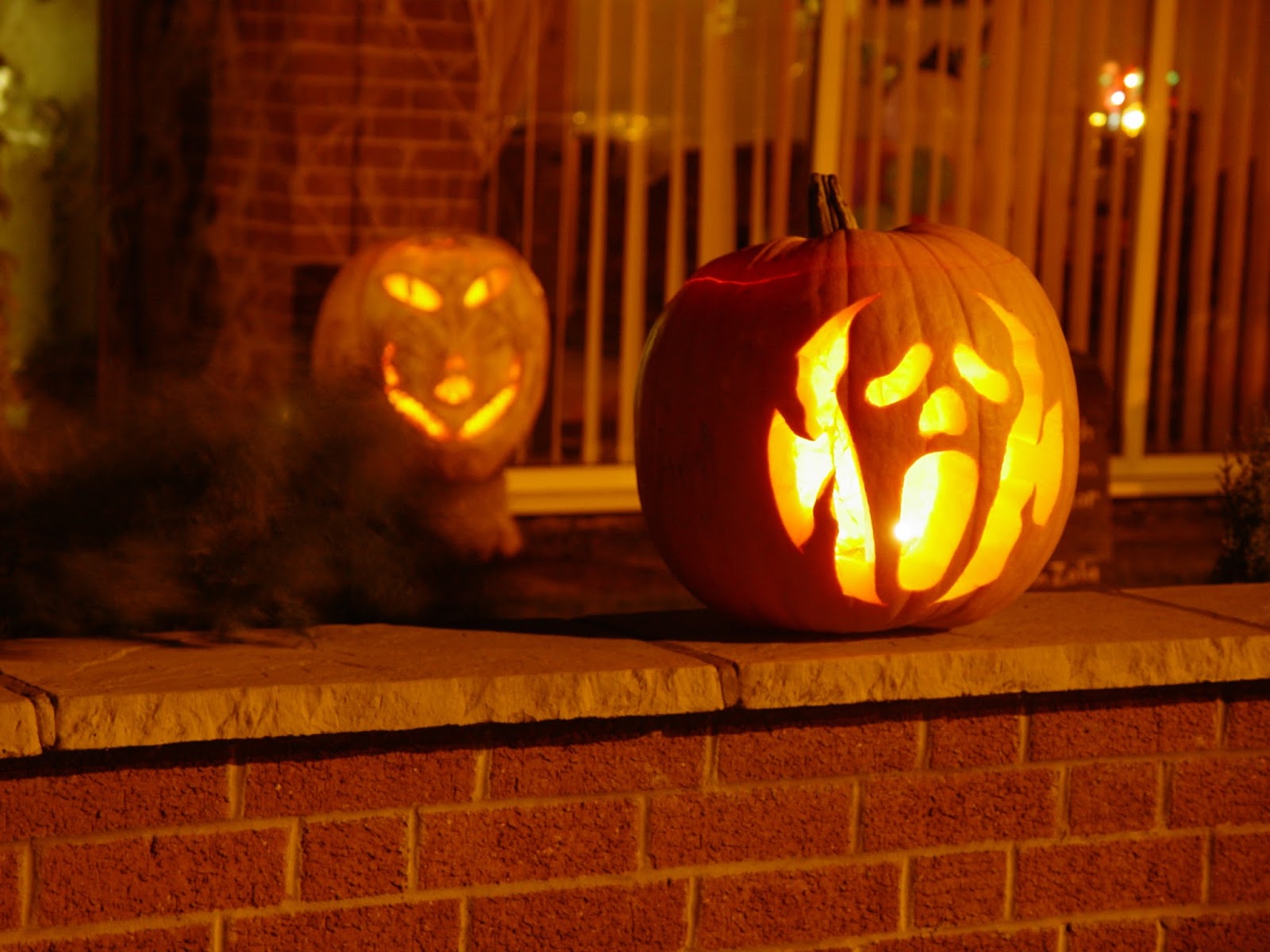
  • Move pumpkins and any potted plants to places where they will not be touched or kicked by visitors.
  • Leave dogs inside the house. The unknown sights and sounds of Halloween can become overwhelming for dogs, so they may feel threatened and react aggressively.

How to Prepare Your Trick-or-Treaters

  • Walk only on lit pathways, rather than cutting through front or backyards.
  • Wear a costume of a comfortable length, so no material drags on the ground.
  • Remove masks or anything obstructing vision when walking around.
  • Make sure to wear comfortable shoes with solid tread to prevent slipping and falling, especially if it's raining.

What Do You Do If an Accident Happens?

  1. Get medical attention as soon as possible.
  2. Document the scene and keep all evidence. Take photos or notes of the exact place where the fall happened. Try to be as precise as possible with any conditions that contributed to your fall, such as lights or any Halloween decorations.
    Report the accident to a landlord or property manager, if the fall occurred on a rental property. Get a copy of their filed report prior to leaving the scene, if possible.
  3. Limit talking to the property owner as much as possible. Emotions and adrenaline run high after an accident, so simply explain that the fall occurred but avoid any emotional confrontation.
  4. Gather the names and contact information of any witnesses.
  5. Contact an attorney before you speak with the insurance company or sign any documents.

Injured in a Slip-and-Fall Accident?

Slip and fall accidents aren't the only safety concerns on Halloween. You're never expecting anyone to become injured on a fun night like Halloween, or on any other day. At Pisanchyn Law Firm, we know how to navigate premises liability cases. Contact us for free to find out how we can help at 1-800-444-5309 or visit PisanchynLawFirm.com.

Pedestrian Accidents: The True Terror of Halloween

Halloween is the deadliest day of the year for child pedestrian accidents according to study released in 2010 that analyzed records from the Fatality Analysis Reporting System (FARS) from 1990-2010.

Over those 21 years, 115 child pedestrian fatalities occurred on Halloween, over double the average number of 2.6 fatalities on other days of the year. Particularly dangerous was the hour between 6:00-7:00 p.m., twilight in most states, when it’s more difficult to see children crossing the street.

Here are some Halloween safety tips to keep you and your family safe during your trick-or-treating outings:
  1. Children should see and be seen in their costumes. Bright colors made of fireproof fabrics that do not obstruct vision or movement are a must-have for Halloween. 
  2. Adults should accompany children under 12 and children over 12 should go in groups. Stick to familiar areas, and bring flashlights or glow sticks to increase visibility as the sun goes down.  
  3. It’s also important to review key pedestrian safety rules like always crossing at street corners, using traffic signals and crosswalks; looking left-right-left when crossing and keep eye contact with drivers you pass in front of to make sure they see you. Watch out for cars backing out of driveways.
If you will be out driving on Halloween, drive slowly. Keep and eye out for pedestrians crossing the street and most importantly, DON'T DRINK AND DRIVE.

If you or a loved has been injured as a result of a car or pedestrian accident, call 1-800-444-5309 for a free consultation or visit PisanchynLawFirm.com.

What is Premise Liability?

Premise liability refers to personal injury claims asserted against a person, company, business, etc. who owns, possesses, or controls the premises, or property, on or where which an injury occurs. Slip and falls in markets, restaurants, office or apartment buildings are classic examples of premises liability.

The key issues in personal injury slip and fall cases are whether the owner had known of the hazard that caused the injury and whether appropriate steps were taken to protect people who are reasonably expected to be on the premises.

Showing that the owner had knowledge of the hazard is part of a premise liability case. For example, a shopper in a department store slips on wet floors in the men’s restroom which had been recently mopped by the janitorial crew. The store in this example is deemed to have had actual notice of the condition because its employees created the condition.

Unfortunately, owners in a premise liability case rarely admit to having been aware of a dangerous condition on their property. Hence, more commonly, we have to show that the owner or possessor had constructive notice of the condition. ‘Constructive notice’ means that the condition was present for a sufficient period of time so that the defendant owner or possessor would have been aware of it if they had conducted a reasonable inspection of the premises.

Another piece of premise liability cases is showing that you were injured because appropriate steps were not taken to protect you, a person who was reasonably expected to be on the premises. For example, the restroom was not closed when the floors were wet and there was not a warning sufficient enough to place you on notice that the area posed a danger and that you should stay away.

This article is for educational purposes only and is not meant to serve as legal advice. You should always contact an attorney to discuss any legal matter.

If you have a personal injury case, such as a slip and fall, or dog bite and want to get an honest assessment of your case and be educated as to your options, please call 1-800-444-5309 or visit PisanchynLawFirm.com